Ancient DNA & UC Berkeley
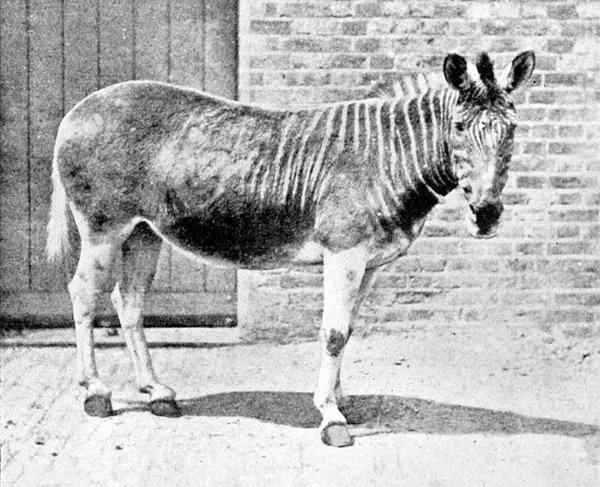
The extinct quagga. Photo: Frederick York
Origins
The field of ancient DNA traces its origins to the University of California, Berkeley, where members of Allan Wilson’s Lab achieved the first successful recovery of DNA from an extinct organism—the quagga—in 1984. This pioneering work established the foundation for ancient DNA research, transforming our ability to reconstruct evolutionary history from genetic material preserved in archaeological and paleontological remains.
Over the past four decades, ancient DNA has evolved into a mature, interdisciplinary field through major methodological advances pioneered by researchers including Svante Pääbo (who conducted his early ancient DNA research as a postdoctoral fellow in Allan Wilson’s lab at Berkeley), as well as Hendrik Poinar, Eske Willerslev, and Matthias Meyer. The development of dedicated clean-room facilities, rigorous contamination controls, targeted DNA enrichment, and high-throughput sequencing technologies has enabled the recovery of genomic data from increasingly older and more degraded specimens. Today, ancient DNA research integrates genomics, computational biology, archaeology, anthropology, and evolutionary theory to reconstruct population histories, investigate adaptation, trace the evolution of pathogens, and reveal how humans and other organisms have responded to changing environments over thousands of years.
TODAY
Building on Berkeley’s foundational role in the birth of ancient DNA research, we are bringing ancient DNA back to UC Berkeley through a new interdisciplinary initiative that unites faculty from three divisions: the College of Letters & Science’s Social Sciences and Biological Sciences divisions, and the Rausser College of Natural Resources. This collaborative effort brings together computational biologists, anthropologists, molecular biologists, and evolutionary scientists to investigate a broad range of evolutionary mechanisms across diverse organisms, including humans. Currently under construction and slated to open in 2027, the new facility will feature state-of-the-art clean rooms equipped with automated liquid-handling robotics to support integrated ancient DNA, proteomics, and epigenomics workflows. The clean-room facility will be housed in the Valley Life Sciences Building, with a complementary omics laboratory located in the Anthropology and Art Practice Building, creating a collaborative research hub that combines cutting-edge molecular technologies with computational and evolutionary expertise.